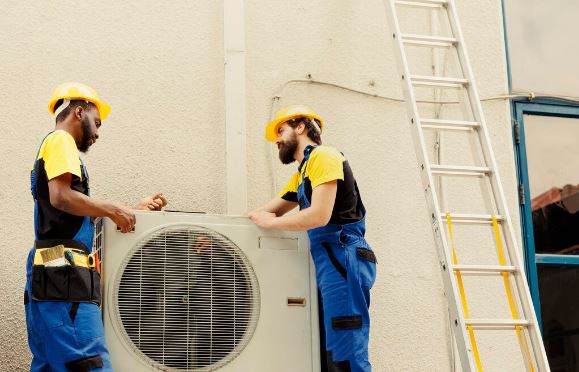
At Universal Connect, we are convinced that HVAC maintenance services in Australia play a critical role in ensuring that commercial buildings in Australia are safe, efficient, and compliant. Commercial HVAC systems have higher loads as compared to residential systems and are susceptible to dust, humidity and extended working hours. Lack of planned servicing leads small mechanical failures to system breakdowns that not only disturb the business operations; they also increase repair expenses.
To the building owners and facility managers, structured maintenance is no option but a strategic move which ensures that the building and its assets are safeguarded, less time is lost, and occupants remain comfortable in various Australian climatic conditions.
Commercial systems have to endure seasonal heatwaves, high humidity and varying occupancy loads. Preventive maintenance deals with these pressures by means of planned inspection and regulated performance tuning.
Regular filter replacement, coil cleaning, and airflow calibration reduce strain on compressors and fans. This lowers energy consumption while maintaining stable indoor temperatures, directly supporting the HVAC preventive maintenance advantages of reduced utility expenditure and predictable operational performance.
Proactive fault detection identifies worn belts, leaking refrigerant lines, and electrical irregularities before breakdown occurs. This minimises emergency shutdowns and supports commercial HVAC servicing by maintaining uninterrupted climate control in offices, retail spaces, and industrial facilities.
Mechanical components last longer when serviced under manufacturer guidelines. Scheduled lubrication and alignment prevent premature wear, allowing businesses to delay costly replacement cycles and maximise return on capital investment.
The professional programs help to maintain every system component within the design limits. Complex commercial installations cannot be cleaned with generic cleaning.
Technicians gauge airflow velocity, pressure differentials and temperature output in order to have balanced allocation across zones. This does away with hot and cold spots without compromising commercial HVAC servicing benefits of regulated indoor air quality.
To avoid circuit overload, voltage stability, contactor wear and accuracy of the control board are inspected. Stable electrical performance improves safety outcomes and reduces the likelihood of mid-cycle system outages.
Certified handling prevents leaks and ensures systems meet environmental regulations. This protects occupants while reinforcing the HVAC preventive maintenance advantages of sustainable operation.
Local codes are checked with the smoke dampers, exhaust systems and emergency cut-offs. Compliance will prevent fines and make the system work properly in the case of emergency evacuation.
Advanced diagnostics enable accurate fault detection beyond surface-level inspection.
The tools assess the efficiency of ducts and detect obstruction or leakage. Improved airflow supports stable cooling output and prevents compressor overload under peak demand.
Heat mapping detects insulation gaps, overheating motors, and refrigerant flow issues. Early detection reduces the chance of catastrophic equipment damage and maintains energy efficiency benchmarks.
Programmable logic controllers and smart thermostats are assessed for response accuracy. This guarantees real-time climate regulation and strengthens the operational reliability of HVAC maintenance services in Australia.
Commercial HVAC systems are integral to building safety and business continuity.
Systems that are not well maintained may fail when there is a spike in demand during extreme temperatures. Preventive maintenance ensures that the parts are ready to handle the load increment, and that cooling is not compromised whenever it is required by occupants.
Blocked filters and microbial buildup compromise ventilation hygiene. Scheduled maintenance reduces exposure to allergens and bacteria, protecting staff health and maintaining regulatory compliance.
Systems with worn starters or damaged relays may not reboot safely after outages. Maintenance testing ensures restart protocols function correctly, preserving operational stability.
Commercial buildings face recurring HVAC-related challenges that structured servicing resolves.
Damaged dampers and blocked ducts create temperature imbalances. Corrective maintenance restores even airflow and ensures productivity by maintaining comfortable working conditions.
Dirty coils and misaligned fans force systems to work harder. Maintenance reduces waste and reinforces HVAC preventive maintenance perks by stabilizing long-term utility spending.
Local expertise and structured service models define professional outcomes.
Universal Connect designs maintenance schedules for retail centers, warehouses, and office complexes. This tailored approach strengthens commercial HVAC servicing by aligning technical care with operational demands.
Detailed service reports document system condition, risk ratings, and upgrade timelines. This supports informed budgeting and reduces unexpected expenditure.
All procedures follow national safety and environmental standards. This ensures systems remain lawful, efficient, and safe for long-term operation.
Regular servicing is not merely corrective, it is strategic asset management.
Reliable temperature control supports staff productivity and customer comfort. Stable HVAC performance reduces service interruptions and reputational risk.
Maintenance eliminates the emergency repair expenses and prolongs the lifespan of equipment. This will guarantee the long-term saving and the security of property value due to the stable system reliability.
A structured plan built around HVAC maintenance services in Australia ensures systems remain efficient, compliant, and dependable in demanding commercial environments. By investing in professional programs that deliver HVAC preventive maintenance services, businesses can protect both their operational performance and long-term infrastructure value.
With Universal Connect’s expertise, commercial properties across Australia gain measurable improvements in safety, efficiency, and cost control, making preventive maintenance a strategic decision rather than a reactive expense.