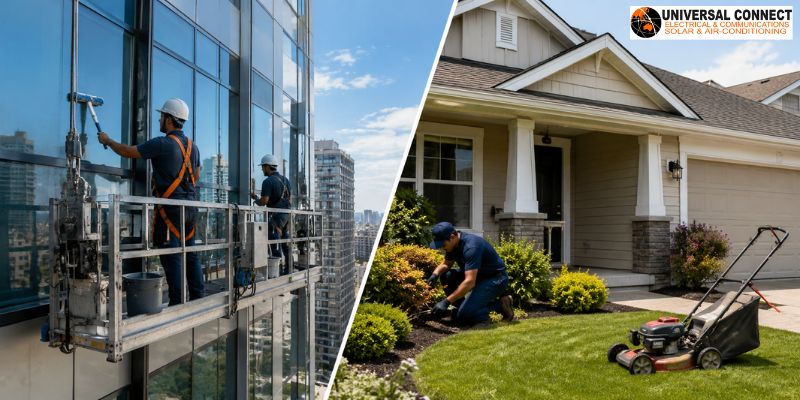
Maintaining a property goes far beyond fixing things when they break. Whether you’re responsible for an office building, retail space, warehouse, apartment complex, or family home, a structured maintenance plan protects your investment, improves safety, and reduces long-term costs. However, one question often arises when planning maintenance work: what are the real differences between commercial vs residential maintenance services?
Although both focus on keeping properties functional and safe, the scale, complexity, legal requirements, and planning involved are vastly different. Understanding these differences helps property owners, facility managers, and homeowners choose the right maintenance strategy.
With years of experience supporting properties across Australia, Universal Connect understands how maintenance requirements vary depending on property type. This guide explains the key distinctions between residential and commercial maintenance while helping you determine which solution best suits your needs.
Property maintenance includes routine inspections, repairs, servicing, cleaning, preventive maintenance, and emergency response to ensure buildings remain safe, efficient, and compliant. While the objectives remain similar, commercial vs residential maintenance services differ significantly because of:
Recognising these differences helps avoid costly mistakes and unnecessary downtime.
Residential maintenance centres on keeping homes comfortable, functional, and safe for occupants.
Common residential maintenance includes:
Unlike commercial buildings, residential properties typically involve fewer occupants and simpler building systems.
For homeowners, maintenance often follows seasonal schedules or responds to individual repair needs rather than detailed annual maintenance plans.
Commercial properties require far more structured maintenance because they support businesses, employees, customers, visitors, and specialised equipment.
Examples include:
Commercial maintenance usually includes:
This is where Universal Connect helps organisations develop proactive maintenance schedules that minimise operational disruption.
One of the biggest building maintenance differences in Australia is the overall service scale.
A standard home generally includes:
Maintenance is usually completed by one technician or a small team.
Commercial facilities often include:
Servicing these buildings requires specialised contractors, multiple trades, and coordinated scheduling.
Compliance represents one of the most important distinctions when comparing commercial vs residential maintenance services. Residential maintenance generally focuses on safety and building codes.
Commercial maintenance must comply with numerous Australian regulations covering:
Failing to meet compliance requirements can result in fines, insurance complications, or business interruptions.
This is why experienced providers like Universal Connect place strong emphasis on documented inspections and scheduled servicing.
The level of systems complexity differs dramatically between homes and commercial facilities.
Residential systems typically include:
Commercial systems may include:
Each system requires specialist knowledge, scheduled inspections, and preventive servicing.
Planning is another major difference.
Residential owners often arrange maintenance:
Commercial properties rely on ongoing maintenance planning that includes:
This proactive approach significantly reduces unexpected repairs and operational downtime.
Residential emergencies generally involve:
Commercial emergencies may involve:
Commercial response times are often more critical because downtime directly affects productivity and revenue.
Residential maintenance expenses are usually predictable and based on occasional repairs or seasonal servicing.
Commercial maintenance budgets often include:
Although commercial maintenance costs are higher, preventive planning usually reduces expensive breakdowns over time.
Preventive maintenance benefits every property but becomes especially valuable in commercial settings.
Benefits include:
Many organisations rely on Universal Connect to implement structured preventive maintenance programs that support long-term property performance.
A service scope comparison highlights how maintenance responsibilities expand as buildings become larger and more complex. Residential properties generally require routine upkeep, while commercial facilities need comprehensive maintenance programs covering multiple building systems, compliance checks, preventive servicing, and emergency response planning.
Residential maintenance typically includes:
Commercial maintenance often includes:
Not every contractor has experience handling both residential and commercial environments.
When comparing providers, consider:
The right maintenance partner should understand both technical requirements and long-term property management goals.
Even with regular servicing, every property experiences maintenance issues. The difference lies in how quickly problems are identified and resolved.
Homeowners commonly face:
Solution: Schedule seasonal inspections and address minor issues before they become expensive repairs.
Commercial properties often encounter:
Solution: Develop preventive maintenance schedules with detailed reporting, ensuring every critical system is serviced on time. This is where Universal Connect helps businesses stay organised while reducing operational interruptions.
Whether you own a home or manage a commercial property, these practical tips can help:
Choosing the right maintenance strategy today can significantly reduce future repair expenses.
Understanding the differences between commercial vs residential maintenance services helps property owners make smarter decisions about safety, budgeting, and long-term asset protection. Residential properties generally require simpler maintenance focused on comfort and everyday functionality, while commercial buildings demand structured planning, ongoing compliance, and proactive servicing to support larger operations.
Whether you’re managing a family home or overseeing a commercial facility, investing in the right maintenance strategy reduces unexpected repairs, improves efficiency, and protects your property’s value. With extensive industry experience, Universal Connect continues to help Australian property owners implement dependable maintenance solutions that deliver long-term peace of mind.
Commercial maintenance involves larger, more complex systems and compliance requirements, while residential maintenance focuses on home safety, comfort, and routine repairs.
Most commercial properties benefit from scheduled monthly, quarterly, and annual maintenance to ensure safety, compliance, and efficient building operations.
Yes, regular inspections identify small issues early, preventing expensive repairs, unexpected breakdowns, and unnecessary disruptions to property operations.
Compliance ensures buildings meet Australian safety regulations, reducing legal risks while protecting occupants, employees, visitors, and business operations.
Choose experienced professionals offering transparent pricing, preventive maintenance plans, qualified technicians, responsive support, and reliable service for your property.