A safety switch that repeatedly trips is more than an inconvenience. It can indicate an electrical fault, damaged appliance, moisture-related problem, or deteriorating wiring that needs professional attention. If your home’s power keeps cutting out unexpectedly, understanding the reason behind the problem is the first step towards restoring electrical safety.
For homeowners searching for an electrician butler, recurring safety switch problems can be particularly frustrating when they affect essential appliances, lighting, kitchen equipment or home office setups. The important thing is not to keep resetting the switch without understanding why it has activated.
In Western Australia, Residual Current Devices (RCDs), commonly known as safety switches, help protect occupants from potentially dangerous electric shocks. They monitor electrical current and disconnect power when they detect an imbalance that may indicate current leaking to earth.
But what actually causes a safety switch to trip? Is it a faulty appliance, moisture entering an electrical fitting or an underlying wiring issue?
This guide explains the common causes, safe troubleshooting steps and professional fault-finding methods that help identify recurring electrical problems in Butler homes.
A safety switch operates when it detects an electrical condition that could create a risk of electric shock. Unlike a standard circuit breaker, which primarily protects wiring against overloads and short circuits, an RCD monitors differences between the active and neutral currents.
When some current escapes through an unintended path, such as through damaged insulation or a person, the RCD detects the imbalance and disconnects the circuit.
Several problems can trigger this response.
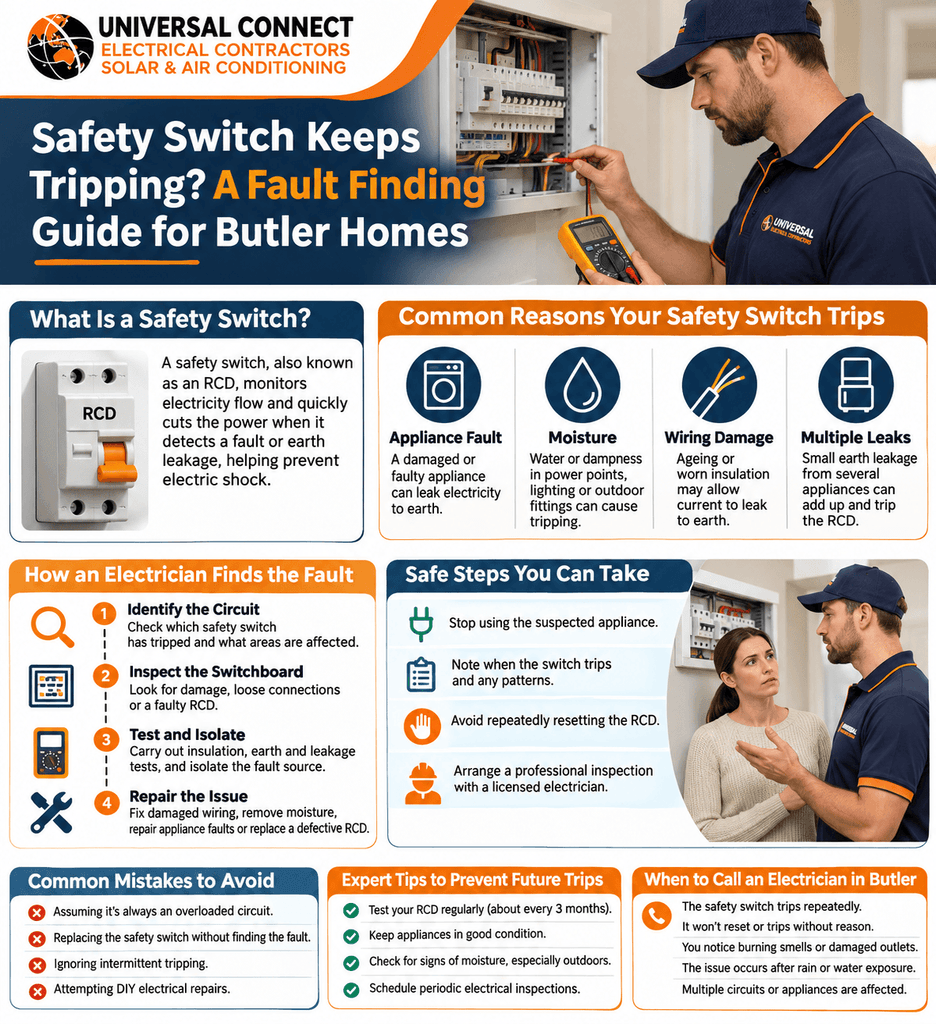
A damaged appliance is one of the common causes of repeated safety switch activation.
Items such as washing machines, refrigerators, dishwashers, kettles, and outdoor power equipment can develop electrical faults through normal wear, internal component failure, or damaged insulation.
For example, a washing machine might operate normally during its wash cycle but cause the safety switch to trip when its heating element activates. This can indicate an insulation fault that allows electrical current to leak to earth.
Other warning signs include:
Never open an appliance or attempt internal electrical repairs yourself. A qualified technician or licensed electrician should determine the appropriate repair.
Moisture is another important cause of electrical faults, particularly around bathrooms, laundries, kitchens, outdoor power points and garden lighting.
Water entering a damaged fitting can create an unintended electrical pathway. This may produce earth leakage and cause an RCD to disconnect the circuit.
For instance, a homeowner might notice that the safety switch trips after heavy rain. The problem could involve an outdoor power point, garden lighting connection, or damaged cable exposed to moisture.
Potential warning signs include:
Do not touch wet electrical equipment or attempt to dry electrical fittings while they remain energised. Keep people away from the affected area and arrange an electrical inspection.
Electrical wiring can deteriorate over time because of ageing insulation, physical damage, poor installation, or environmental exposure.
When insulation becomes damaged, current may escape from its intended pathway. This can create an earth leakage condition that activates the safety switch.
In some cases, the problem may occur inside a wall, ceiling cavity, or concealed electrical connection. This makes visual identification difficult for homeowners.
A licensed electrician can use appropriate electrical testing equipment to identify insulation resistance problems and determine whether wiring needs repair or replacement.
Not every safety switch problem comes from one clearly faulty appliance.
Several appliances can contribute small amounts of normal leakage current during operation. When these individual leakage currents accumulate, their combined effect may approach the RCD’s operating threshold.
Adding another appliance or switching on equipment with heating elements can cause the total leakage to exceed that threshold.
This is one reason why a safety switch may trip intermittently rather than immediately.
A qualified electrician can measure leakage current, assess circuit loading, and determine whether circuit distribution or equipment repairs are required.
When a safety switch repeatedly activates, professional fault finding helps identify the actual source instead of relying on guesswork.
An experienced electrician butler can assess the switchboard, inspect the affected circuits, and carry out suitable electrical tests to establish why the protective device is operating.
The investigation generally involves several stages.
The first step is determining which safety switch has activated and what parts of the property have lost power.
For example, if the kitchen, laundry and outdoor power points stop working together, the electrician will investigate which circuits are protected by the affected RCD.
This information helps narrow down the possible fault location.
The electrician checks the switchboard for visible damage, signs of overheating, loose components, unsuitable protection arrangements, and potential device faults.
They also assess whether the protective devices are appropriate for the installation.
A safety switch that will not remain switched on should never be forced into position.
Electrical testing provides more reliable information than repeatedly switching appliances on and off.
Depending on the suspected problem, the electrician may perform:
These tests help distinguish between appliance-related problems, wiring faults, moisture damage, and defective protective equipment.
Once the fault has been established, the electrician determines the appropriate corrective action.
This could involve repairing damaged wiring, replacing a faulty fitting, addressing moisture ingress, repairing an appliance connection, or replacing a defective RCD.
The repair should address the underlying electrical problem rather than simply restoring power.
If you are experiencing a safety switch keeps tripping Butler problem, avoid repeatedly resetting the switch. Its activation is a protective warning that deserves attention.
There are a few safe steps homeowners can take while arranging professional assistance.
If you notice that a particular appliance is associated with the electrical interruption, stop using it.
If it is safe and dry to do so, unplug the appliance without touching damaged plugs, cords, or wet equipment. Otherwise, leave it alone and wait for professional assistance.
Pay attention to the circumstances surrounding the trip.
Useful observations include:
These details can help an electrician narrow down the fault more efficiently.
A safety switch is designed to interrupt electricity when it detects a potentially dangerous condition.
Repeatedly restoring power without identifying the cause can expose occupants and electrical equipment to unnecessary risk.
If the switch trips again, will not reset, or is associated with burning smells, sparks, smoke, or electric shocks, leave it off and seek urgent professional assistance. If there is a fire or immediate danger, move away and call emergency services.
Recurring electrical interruptions require proper investigation.
A licensed electrician can determine whether the problem relates to an appliance, circuit wiring, moisture ingress, accumulated leakage current or a faulty protective device.
This approach helps restore reliable power while maintaining the safety of the electrical installation.
Safety switch problems are not limited to residential properties. Commercial premises can experience similar issues involving office equipment, commercial kitchen appliances, refrigeration systems, lighting and external electrical installations.
For businesses in and around Butler, unexpected power interruptions can affect daily operations and create difficulties for employees and customers.
Consider a small commercial kitchen where a faulty appliance causes an RCD to trip during busy operating hours. The interruption may affect refrigeration or other essential equipment connected to the protected circuit.
A commercial electrician can investigate the affected installation, identify the source of earth leakage and recommend suitable corrective measures.
Commercial fault-finding may involve:
Workplace electrical safety also requires appropriate inspection and testing arrangements based on the equipment and operating environment.
Businesses should not bypass protective devices to keep equipment running. A recurring trip needs investigation before the affected equipment is returned to service.
Some electrical faults are intermittent, while others produce immediate warning signs.
Knowing when to seek assistance can help prevent a relatively small electrical problem from developing into a more serious safety concern.
Contact a licensed electrical contractor if:
In Western Australia, electrical installation work must be carried out by appropriately qualified electrical contractors Butler workers should use a licensed electrical contractor.
Before engaging an electrician, homeowners can check the contractor’s licence through the WA Government’s Building and Energy licence search.
Understanding what not to do is just as important as knowing the possible causes.
An overloaded circuit generally causes a circuit breaker to operate. An RCD responds to an imbalance between active and neutral current.
Although combination devices can provide both types of protection, the distinction matters when diagnosing a fault.
A defective RCD can certainly cause problems. However, replacing it without investigating the installation may leave an underlying wiring or appliance fault unresolved.
Proper testing should establish whether the protective device itself is faulty.
A switch that trips once every few days is not necessarily harmless.
Intermittent problems can be associated with appliances that operate only during certain cycles, moisture exposure, or electrical components that develop faults as they heat up.
The absence of a constant problem does not mean the installation is safe.
Opening a switchboard, modifying fixed wiring or bypassing an RCD can expose people to serious electrical hazards.
Western Australian regulations require electrical work to be undertaken by appropriately licensed people.
Homeowners should limit their involvement to safe observations and basic checks that do not involve opening electrical equipment or touching wiring.
Preventive maintenance can help identify developing electrical issues before they cause repeated interruptions.
Here are several practical recommendations for Butler homeowners.
Western Australia’s Building and Energy guidance recommends testing RCDs according to the manufacturer’s instructions or every three months, whichever is more frequent.
If you feel confident doing so and your switchboard is in good condition, use the designated test button marked T.
The device should trip immediately. If it does not operate correctly or cannot be reset, contact a licensed electrical contractor.
Older appliances may develop insulation deterioration, damaged connections, or internal component faults.
Pay attention to unusual operating behaviour, damaged cords and electrical interruptions associated with particular equipment.
Have suspect appliances assessed before continuing to use them.
Bathrooms, laundries, outdoor areas and kitchens deserve particular attention because moisture can affect electrical fittings.
Have leaking plumbing, damaged weatherproof fittings and signs of water entry investigated promptly.
Never touch electrical equipment that may be wet or energised.
Periodic electrical inspections can help identify damaged accessories, deteriorating wiring and protective devices that require attention.
The appropriate inspection frequency depends on the property’s age, condition, usage and electrical history.
For households experiencing recurring faults, an earlier inspection is sensible.
For homeowners needing reliable electrical assistance, Universal Connect Pty Ltd can be considered when arranging professional electrical fault-finding and safety inspections in the Butler area. The priority should always be identifying the cause, carrying out suitable repairs and confirming that the installation is safe.
A repeatedly tripping safety switch should never be treated as a minor inconvenience. It may indicate earth leakage, damaged wiring, moisture ingress, a faulty appliance or an issue with the RCD itself. Identifying the underlying cause early helps protect your household, electrical equipment, and property.
If you are experiencing recurring electrical interruptions, contacting a licensed electrician butler homeowners can rely on is an important step towards restoring electrical safety. An experienced electrician in Butler can investigate the affected circuits, perform appropriate electrical testing and recommend suitable repairs.
For professional electrical assistance, Universal Connect Pty Ltd can be considered when arranging electrical fault finding and safety inspections in Butler. Always prioritise proper diagnosis and licensed electrical repairs rather than repeatedly resetting a tripping safety switch.
A safety switch can trip even when portable appliances are unplugged because the fault may be within fixed wiring, hardwired equipment, lighting circuits, or the protective device itself.
Moisture entering an electrical fitting, damaged cable insulation, and a defective RCD are possible causes.
A licensed electrician can isolate and test the affected circuits to determine where the electrical leakage is occurring.
Yes. A washing machine can develop insulation faults in its motor, heating element, pump or internal wiring.
For example, the machine may appear to work normally during part of a cycle but trip the safety switch when the heating element operates.
Stop using the appliance if it appears to trigger the fault. Have it assessed by an appropriately qualified repair technician or electrician before using it again.
Repeated tripping should be treated as a potential electrical safety issue.
An RCD may be detecting current leakage associated with damaged wiring, moisture or a faulty appliance. It may also indicate that the protective device itself needs testing.
Do not bypass the safety switch or repeatedly reset it. Leave the affected circuit switched off and arrange a professional inspection.
WA Building and Energy recommends testing RCDs in accordance with the manufacturer’s instructions or every three months, whichever is more frequent.
The test button is generally marked with the letter T. When operated correctly, the RCD should immediately disconnect the protected circuit.
If the switch fails to trip or cannot be reset, contact a licensed electrical contractor for further investigation.
Contact a licensed electrician when the safety switch trips repeatedly, refuses to reset or activates without an identifiable reason.
You should also seek assistance if you notice burning smells, damaged outlets, buzzing, water exposure or unusual electrical behaviour.
An experienced residential electrician can perform circuit isolation, electrical testing and fault identification to determine the appropriate repair.