
Electrical faults are not always obvious. A power point may look normal while its connections are deteriorating, a safety switch may not be working correctly, or an overloaded power board may be creating unnecessary risk behind furniture. For Perth homeowners, regular checks can help identify warning signs before they develop into more serious problems. This home electrical safety checklist perth guide explains what to inspect, how to recognise potential hazards and when to arrange professional assistance. Understanding these checks also helps homeowners know when to contact professional electrical contractors in WA for a qualified assessment.
Electrical safety involves more than keeping appliances switched off when they are not in use. Wiring, switchboards, safety switches, outlets and fixed electrical equipment all need to remain in suitable working condition. Older homes may have ageing electrical components, while renovated properties can develop problems if new appliances or circuits place additional demands on an existing installation.
Perth’s changing weather and everyday household activities can also influence electrical safety. Outdoor power equipment, air conditioners, pool equipment and garden lighting may be exposed to moisture, heat or physical damage. These conditions make it sensible to inspect accessible equipment regularly and arrange a professional electrical inspection when warning signs appear.
Homeowners should remember that a visual check cannot confirm whether concealed wiring is safe. Electrical faults can develop inside walls, ceilings and switchboards without producing obvious external damage. A checklist is therefore a useful first step, not a substitute for testing by a qualified electrical professional.
A practical safety routine starts with visible warning signs and simple observations. Homeowners can check accessible areas without removing covers, opening switchboards or touching exposed wiring. If anything appears damaged, smells unusual or behaves inconsistently, stop using the affected equipment where safe to do so and seek professional advice.
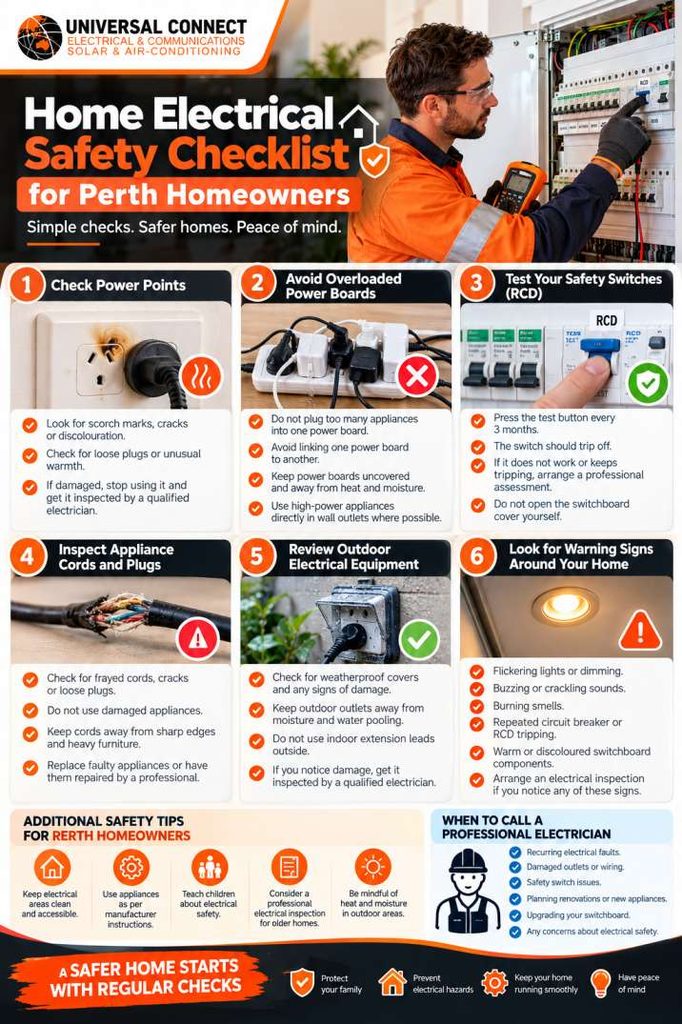
Inspect accessible power points for cracks, discolouration, loose-fitting plugs, unusual warmth or dark marks around the socket openings. Power point scorch marks can indicate overheating, arcing or another electrical fault. A burning smell, buzzing sound or visible sparks should never be treated as normal, even if the appliance continues to operate.
Do not remove the outlet cover or attempt to tighten internal connections yourself. If a power point appears damaged, stop using it and arrange an assessment by a qualified electrician. If there is active smoke or fire, move away, call emergency services and do not touch the affected electrical equipment.
Power boards are convenient, but using too many appliances on one board or connecting one power board to another can create hazards. Overloaded power boards may overheat, particularly when several high-demand appliances operate at the same time. Portable heaters, kettles and other high-power appliances should be used in accordance with their instructions and the circuit’s capacity.
Check for damaged cords, cracked sockets, discolouration and signs of heat around plugs. Keep power boards uncovered and away from moisture. Avoid running cords under rugs, through doorways where they can be crushed, or across areas where people may trip. If you regularly need extra outlets, ask an electrician whether additional fixed power points or a circuit assessment would be appropriate.
A safety switch, also known as a residual current device (RCD), is designed to disconnect electricity quickly when it detects certain current leakage conditions. It provides important protection against electric shock, but it does not prevent every electrical hazard or replace safe appliance use.
A safety switch test should be carried out according to the manufacturer’s instructions and applicable guidance. For many residential RCDs, the test button should be operated every three months. Before testing, consider whether switching off the supply could affect computers, medical equipment, security systems or other sensitive devices. If you are unsure how to test the device safely, seek advice from an electrician.
When the test button is pressed, the device should trip as specified by its manufacturer. If it does not operate, arrange prompt professional attention. Do not open the switchboard or attempt to repair the device yourself. If an RCD trips repeatedly during normal use, do not keep resetting it without investigating the cause.
Frayed insulation, exposed conductors, crushed cords and loose plugs can create electric shock and fire risks. Check frequently used appliances such as kettles, washing machines, vacuum cleaners and portable fans for visible damage. Pay attention to cords near hinges, moving parts and areas where furniture may press against them.
Damaged electrical equipment should be removed from service until it can be safely repaired or replaced. Never use adhesive tape as a substitute for a proper repair to damaged mains wiring. If a cord or plug becomes unusually hot, produces a burning smell or causes a protective device to trip, stop using the appliance and arrange an appropriate assessment.
Outdoor outlets, garden lighting, pool equipment and extension leads need particular care because moisture can increase electrical risk. Look for cracked covers, damaged insulation, loose fittings and equipment that appears exposed to rain or water. Outdoor electrical equipment should be suitable for its location and installed with appropriate protection.
Never handle plugs, switches or electrical equipment with wet hands or while standing in water. Do not use indoor-rated extension leads outside, and avoid using electrical equipment that has been submerged or water-damaged until it has been professionally assessed. If you notice damaged outdoor wiring or fittings, keep people away from the affected area and arrange qualified assistance.
Some electrical problems cannot be identified through a visual inspection alone. A professional assessment may involve checking the switchboard, testing protective devices, examining accessible fittings and investigating symptoms such as flickering lights or unexplained power interruptions. The appropriate work depends on the property’s age, condition, electrical history and any warning signs identified.
An electrical inspection may be appropriate when buying an older property, completing renovations, adding high-demand appliances or investigating recurring electrical problems. It is also worth seeking professional advice if the home has an ageing switchboard, limited safety-switch protection or a history of unexplained tripping.
An inspection can help identify defects that need attention, but its scope should be agreed in advance. Ask what areas will be assessed, which tests are included and whether any inaccessible components limit the findings. A clear explanation of identified issues, their urgency and recommended corrective work helps homeowners make informed decisions without assuming that every older component automatically needs replacement.
Contact a qualified electrician if you notice any of the following:
These symptoms can have different causes, so it is important not to diagnose the fault by guesswork. Stop using the affected equipment where safe, keep others away and arrange professional assessment. If there is immediate danger, smoke or fire, leave the area and call emergency services.
When electrical work is needed, homeowners should choose a suitably qualified and appropriately licensed electrical contractor for the work being performed. In Western Australia, electrical licensing requirements apply to electrical work, and homeowners should verify that the person undertaking the work is authorised for the relevant task.
Professional electrical contractors in WA can assess electrical hazards, explain the findings and recommend suitable corrective work. Before proceeding, ask for a written scope, a clear quotation and an explanation of any urgent safety issues. Confirm who will carry out the work, what testing or documentation will be provided and whether the proposed solution addresses the underlying fault rather than only its visible symptoms.
Residential electrical work differs from work in offices, shops and other business premises because the installation, equipment demands and operating conditions may be different. Commercial electrical contractors may work with more complex distribution systems, specialised equipment and business-specific safety requirements. Homeowners should still expect any electrical work in a residence to be assessed against the requirements relevant to that property.
A licensed electrical contractor should be selected based on the work required, not simply on the size of the company or the number of services advertised. For household safety concerns, explain the symptoms clearly and ask whether the proposed visit includes diagnosis, testing, repairs or only a visual assessment. This helps avoid confusion about the service being provided.
One common mistake is repeatedly resetting a circuit breaker or RCD without investigating why it tripped. Protective devices operate for a reason, and recurring trips can indicate a faulty appliance, damaged wiring or another issue that needs attention. Another mistake is assuming that new-looking outlets or a recently renovated room prove the entire electrical installation is safe.
Homeowners should also avoid DIY electrical repairs, including replacing fixed wiring, opening switchboards or attempting to repair damaged outlets. Electrical work can expose people to dangerous voltages and may be subject to licensing requirements. Simple housekeeping tasks, such as keeping cords undamaged and avoiding overloaded power boards, are useful, but they do not authorise anyone to perform electrical installation work.
A manageable routine is more effective than waiting until a fault interrupts daily life. Check visible cords and outlets periodically, test RCDs at the recommended interval, and keep a record of recurring electrical problems. When purchasing major appliances or planning renovations, discuss the existing installation and expected electrical demand with a qualified professional before connecting additional equipment.
It is also useful to explain electrical safety to everyone in the household. Children should know not to insert objects into outlets or touch damaged cords, while adults should understand how to respond to a tripping safety switch or burning smell. Keep access to the switchboard clear, but do not remove its covers or attempt internal work. These simple habits support safer use of electricity between professional assessments.
A consistent electrical safety routine helps Perth homeowners recognise early warning signs, reduce avoidable risks and understand when professional assistance is necessary. Use this home electrical safety checklist perth as a starting point, but remember that visual checks cannot confirm the condition of concealed wiring or prove that every protective device is functioning correctly. For faults, recurring trips, damaged fittings or planned electrical upgrades, arrange an assessment by a suitably qualified professional.
Universal Connect Pty Ltd can help homeowners explore appropriate electrical safety and maintenance options for their property. The best next step is to describe the symptoms or concerns clearly, ask what assessment is recommended and confirm the scope of any proposed work before it begins. Prioritising safety, qualified workmanship and transparent advice helps homeowners make better-informed decisions about their electrical systems.
Homeowners can regularly look for visible damage, overheated plugs, unusual smells and damaged cords as part of normal household maintenance. RCDs commonly require testing every three months in accordance with the manufacturer’s instructions and applicable guidance. A professional inspection should be considered when warning signs appear, after relevant renovation work or when the installation’s condition is uncertain. The appropriate inspection frequency depends on the property’s circumstances rather than a single interval for every home.
Unplugging an appliance may help identify whether a particular device is associated with the problem, provided it is safe to do so and there are no signs of damage, moisture or overheating. Do not repeatedly reset the safety switch or open the switchboard. If the cause is unclear, the switch continues to trip or there are signs of an electrical fault, stop using the affected circuit where safe and contact a qualified electrician for diagnosis.
Yes. Scorch marks can indicate overheating, arcing or another fault, although the precise cause cannot be determined from appearance alone. Stop using the affected outlet and do not remove its cover or attempt a repair. If there is smoke, fire or an immediate danger, move away and contact emergency services. Otherwise, arrange a qualified electrician to assess the outlet and determine whether the connected appliance, wiring or another component needs attention.
Homeowners can perform basic visual checks and follow safe appliance-care instructions, but electrical installation work in Western Australia is subject to licensing requirements. Tasks involving fixed wiring, switchboards, outlets and electrical installations should be referred to an appropriately licensed professional. Attempting repairs without the required qualifications can create serious safety risks and may lead to non-compliant work. When in doubt, leave the equipment untouched and seek qualified advice.
Consider an inspection if you notice repeated tripping, persistent flickering, unusual sounds, burning smells, damaged fittings or shocks from electrical equipment. It may also be sensible when buying an older property, planning renovations or adding equipment that could increase electrical demand. Explain the property’s history and symptoms when arranging the visit, and ask what testing is included. This allows the electrician to recommend an appropriate scope and explain any defects that need urgent attention.