
A homeowner finds a cheap quote online for new downlights and a power point in the kitchen. The installer seems friendly and quick. Weeks later, the lights flicker, a breaker keeps tripping, and the installer stops answering calls. When a qualified electrician inspects the work, he finds it was never lodged, never tested and isn’t safe. This happens more often than people think, and it’s why hiring professional electrical contractors in WA matters.
Many people assume anyone with tools and experience can do electrical work. In Western Australia, that’s not true. The law treats electrical work seriously, because mistakes can cause fires, shocks and serious injuries.
So, what is a licensed electrician in WA, and how can you confirm the person in your home holds the right licence? This guide answers both questions in plain language, with practical checks you can do before any work starts.
Whether you need residential electrical services for a renovation or regular electrical, maintenance services for a rental or business, these steps help you hire with confidence.
Electricity doesn’t forgive shortcuts. A loose connection inside a wall can overheat for months before it starts a fire. A missing earth can turn a metal appliance into a shock hazard. Licensing exists to make sure only trained, assessed people do this work.
In WA, Building and Energy regulates electrical licensing. It issues licences, investigates complaints, and takes action against unlicensed or unsafe work. Licensing also creates accountability. When a licensed contractor does the job, there’s a clear record of who did it and a legal duty to get it right.
People often say “licensed electrician” as if it means one thing. In WA, two separate licences work together.
An electrical worker licence belongs to an individual. It shows the person has completed the required training and can legally carry out electrical work. However, this licence alone doesn’t allow the person to contract directly with you for work. A licensed worker generally works for, or under, a licensed electrical contractor.
An electrical contractor licence allows a business or person to offer and carry out electrical work for customers. The contractor takes legal responsibility for the work its electricians perform. Every contractor must have a nominee who holds an electrical worker licence and oversees the work.
Here’s the key point: the person who quotes, invoices and takes responsibility for your job should hold an electrical contractor licence. The person doing the work on site should hold an electrical worker licence.
| Licence Type | Who Holds It | What It Allows |
|---|---|---|
| Electrical worker licence | An individual electrician | Carry out electrical work for a licensed contractor |
| Electrical contractor licence | A business or sole trader | Contract with customers and take legal responsibility for the work |
| Restricted licence | Some specialised trades | Limited electrical tasks linked to their trade only |
| Training permit | Apprentices | Work under direct supervision of a licensed electrician |
Any new electrical installation needs a licensed contractor. This includes new circuits, power points, lighting, switchboard upgrades, air conditioning circuits, EV chargers and solar connections. Even “small” jobs such as moving a power point count as electrical work.
Electrical repair work also requires a licence. Tracing a tripping circuit, replacing a faulty switch or repairing damaged cabling all involve live systems. A licensed electrician knows how to isolate power safely, find the real cause and test the circuit afterwards.
When you book professional electrical contractors in WA for repairs, they should test the work before they leave, not just confirm the lights come on.
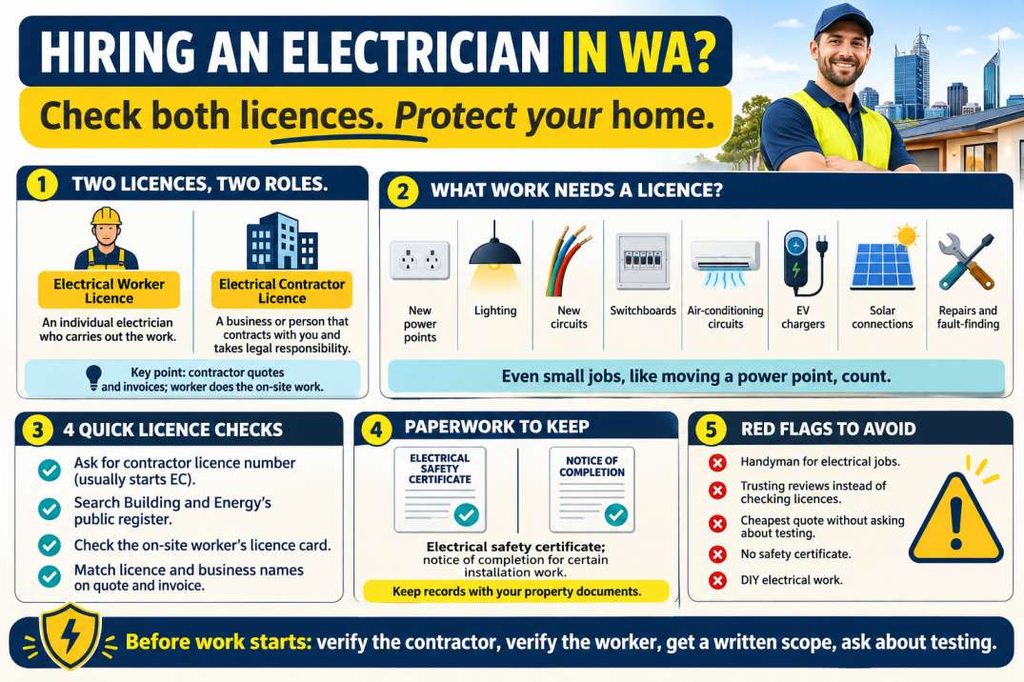
Checking a licence takes only a few minutes. It’s one of the smartest things you can do before work begins.
Licensed work comes with paperwork that protects you. After completing certain electrical installing work, the contractor must lodge a notice of completion with the network operator. This creates an official record that licensed work took place at your property.
You should also receive an electrical safety certificate for the work. Keep it with your property records. It helps with insurance claims, property sales and future electrical upgrades. Good compliance also means the contractor has tested the work to the required standards.
Here’s a common example. A landlord buys a rental property and finds a new outdoor power point with no records. Without paperwork, they can’t confirm who installed it or whether it was tested. A licensed contractor must inspect it, which adds cost and delay. Proper records from day one avoid this problem.
From our experience on WA homes and businesses, these habits make the biggest difference:
Licensing isn’t just paperwork. It’s your proof that trained people did the job safely and legally. Hiring professional electrical contractors in WA protects your home, your family and your property value.
Now you know what is a licensed electrician in WA, the two licence types, and how to check them on the public register before work starts.
When you book residential electrical services, ask for the contractor licence number, confirm the worker’s licence and keep every certificate.
At Universal Connect Pty Ltd, we’re happy to share our licence details upfront and explain every step of the job. If you need an electrician you can check and trust, our team is ready to help.
An electrical worker licence belongs to an individual and shows they can legally carry out electrical work. An electrical contractor licence allows a business or sole trader to contract with customers and take legal responsibility for the work. In practice, you should hire a business that holds a contractor licence, and the electrician on site should hold a worker licence. Reputable professional electrical contractors in WA will gladly provide both licence numbers when asked.
Start by asking for the electrical contractor licence number, which usually starts with “EC” and should appear on quotes, ads and vehicles. Then search Building and Energy’s public licence register to confirm it’s current and matches the business name. When the electrician arrives, ask to see their worker licence card. If anything doesn’t match, pause the job and ask questions before any work begins on your property.
No. In WA, unlicensed people cannot legally carry out electrical work, even in their own home. This includes jobs that seem simple, such as replacing a power point, moving a light switch or adding a new circuit. Unlicensed work can void your home insurance and create serious fire and shock risks. If you need residential electrical services, always use a licensed contractor who tests the work and provides proper paperwork.
You should receive an electrical safety certificate for the work. For certain installation work, the contractor must also lodge a notice of completion with the network operator, which creates an official record. Keep your certificate with your property documents. It helps with insurance claims, property sales and future upgrades. If you don’t receive paperwork, ask the contractor directly, because missing records can cause problems later.
It depends on the property’s age, use and condition. Older homes, rentals and busy businesses benefit from regular checks, because switches, RCDs and cabling wear over time. Routine electrical, maintenance services can find faults early, test safety switches and confirm circuits aren’t overloaded. Book a check after buying a property, before renting it out, or whenever you notice flickering lights, tripping breakers, warm outlets or burning smells.