A sudden power outage can interrupt your day, reset your appliances and leave you wondering whether your home’s electrical system is safe. Sometimes, the electricity returns within minutes and everything works normally. In other situations, lights flicker repeatedly, circuit breakers trip or sensitive electronics stop working after power is restored.
For homeowners, understanding the difference between a power outage, a voltage fluctuation and an electrical surge is essential. Each problem has different causes, and the right response depends on what is happening inside your home and across the local electricity network.
If you are searching for an electrician eglinton, this guide explains how electrical interruptions occur, how to protect household appliances, which warning signs deserve attention and when to arrange a professional inspection.
Power Outages and Electrical Surges are related concerns, but they are not the same problem. An outage means the supply of electricity has stopped. A surge is a brief increase in voltage that can damage connected equipment. Both deserve attention, particularly when interruptions happen repeatedly or are accompanied by unusual electrical behaviour.
This guide from Universal Connect Pty Ltd covers practical precautions, electrical maintenance in Eglinton and the steps homeowners can take to reduce avoidable risks.
Before deciding how to respond, it helps to understand what happens when the electrical supply becomes unstable.
A power outage occurs when electricity is no longer available to some or all of a property. The cause may be outside the home or within its electrical installation.
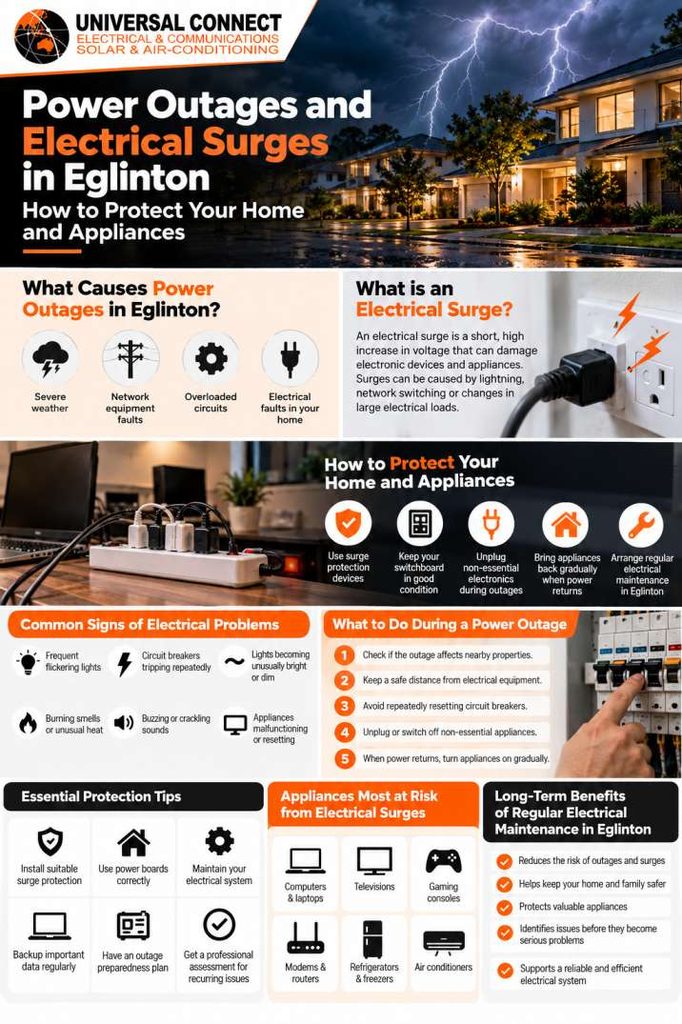
Common causes include:
The distinction matters. If neighbouring properties are also without electricity, the issue may involve the local network. If only one circuit or your home is affected, the cause may be within your installation. Neither situation should be assumed without appropriate checks.
An electrical surge is a short-lived rise in voltage above the normal supply level. It can place stress on electronic components and, depending on its magnitude and the equipment involved, cause immediate damage or contribute to premature failure.
Surges can occur because of lightning-related activity, switching operations on the electricity network or changes involving large electrical loads. A surge may be brief enough that you do not notice it happening.
It is also important to distinguish a surge from other power-quality problems:
Flickering lights do not automatically mean a surge has occurred. Persistent flickering, unexpected brightness changes or repeated interruptions can indicate an electrical issue that needs investigation.
Homes depend on electricity for refrigeration, communication, lighting, heating and cooling, security systems and everyday appliances. An interruption can therefore create more than a temporary inconvenience.
The potential consequences include:
Local conditions and the cause of an interruption will influence the risk. For example, a brief network outage that ends without unusual symptoms is different from repeated power losses accompanied by buzzing sounds or lights becoming unusually bright.
The most useful response is to observe what happened, identify whether the interruption affects one circuit or the whole property, and avoid attempting repairs yourself.
When the electricity goes off, the priority is safety. A calm, systematic response can help you work out whether the interruption is widespread or limited to your home without exposing you to electrical hazards.
From a safe location, check whether nearby homes or streetlights have also lost power. You can also check the relevant electricity distributor’s outage information using a mobile device, provided it is safe to do so.
If the wider area is affected, follow official outage updates and instructions. Avoid approaching damaged powerlines, electrical equipment or fallen cables. Treat every fallen powerline as live and dangerous.
If the interruption appears limited to your property, continue with basic observations only. Do not open switchboards or remove electrical covers.
If only part of your home has lost power, a circuit breaker may have tripped. A safety switch may also have disconnected a circuit after detecting a possible electrical fault.
You can look at the external switchboard controls if the area is dry, accessible and safe. However, do not touch equipment that is wet, damaged, hot, buzzing or showing signs of burning.
A tripped breaker is not a reason to keep resetting it repeatedly. If it trips again, leave it alone and arrange an assessment by a licensed electrician.
If electricity is still available, switch off or unplug non-essential electronics where it is safe to do so. Consider equipment such as:
Leave essential medical equipment connected as directed by its manufacturer and healthcare provider. If someone depends on electrically powered medical equipment, follow their emergency plan and seek appropriate assistance if the supply is interrupted.
Avoid handling plugs or electrical equipment with wet hands or standing water nearby.
When electricity is restored, some appliances may restart automatically. Air conditioners, pumps and other motor-driven equipment may also attempt to resume operation.
Where practical, bring non-essential equipment back into use gradually rather than switching on everything at once. Check whether clocks have reset and whether essential appliances appear to be working normally.
If you notice burning smells, repeated breaker trips, unusual buzzing or unexplained changes in light brightness, stop using the affected equipment and arrange professional assistance.
You cannot prevent every surge or supply interruption. However, suitable protection and a well-maintained electrical installation can reduce certain risks.
Surge protection devices are designed to limit transient overvoltage reaching connected equipment. Different devices provide different levels of protection, so choosing the correct type matters.
Common options include:
A surge-protected power board is not the same as an ordinary power board. Check the product specifications and follow the manufacturer’s guidance.
No surge protection device can guarantee that every appliance will survive every electrical event. The overall level of protection depends on the device, installation, earthing arrangements and characteristics of the surge.
A licensed electrician can assess whether switchboard-mounted protection is appropriate for your home and whether the existing installation supports it.
The switchboard is a central part of your home’s electrical safety system. It distributes electricity to circuits and houses protective devices intended to disconnect power under specified fault conditions.
During an inspection, a licensed electrician may assess:
Do not remove the switchboard cover to inspect internal components yourself. Some parts can remain hazardous even when individual circuits are switched off.
Surge protection does not make every power board safe for every use. Avoid daisy-chaining power boards, exceeding their rated capacity or using damaged equipment.
High-demand appliances should be connected according to their manufacturer’s instructions. A portable power board should not be used as a substitute for a properly designed electrical circuit.
If you regularly rely on extension leads because there are not enough suitable outlets, ask an electrician to assess whether your power outlet arrangement needs improvement.
Some interruptions are caused by the electricity network and require the distributor’s response. Others originate within the home and need electrical investigation.
Contact a licensed electrician when you notice any of the following:
Treat burning smells, smoke, sparks, electric shocks and signs of an electrical fire as urgent safety concerns. Keep away from the affected area, avoid touching electrical equipment and seek emergency assistance when necessary. If there is immediate danger, contact emergency services.
An electrician can test the installation and identify whether the issue relates to a circuit, connection, protective device or another electrical component. If the evidence points to a network supply problem, the electrician may recommend contacting the electricity distributor.
When arranging an inspection, choose appropriately licensed electrical contractors who can explain the work required and its purpose.
Before work begins, ask:
Universal Connect Pty Ltd can be considered when seeking assistance with electrical concerns in Eglinton. The appropriate scope of work will depend on the symptoms, the condition of the installation and the findings of a professional assessment.
Preventive maintenance helps identify developing problems before they cause more serious disruption. It cannot eliminate every outage or surge, but it can help keep the electrical installation in suitable condition.
If an interruption happens more than once, note the date, time and what occurred immediately beforehand.
Useful details include:
This record can help an electrician identify patterns and decide which tests may be useful.
For example, suppose a homeowner notices that the kitchen circuit trips whenever several appliances operate together. Recording which appliances were running can help the electrician investigate the circuit’s load and condition. It does not prove that the circuit is overloaded, but it provides a useful starting point.
Periodically check power boards, plugs, visible cables and appliance cords for obvious damage. Stop using damaged items rather than attempting makeshift repairs.
Keep electrical equipment away from water and avoid covering ventilation openings on devices that require airflow. Follow the manufacturer’s maintenance instructions for appliances and protective equipment.
Never remove outlet covers, dismantle a switchboard or attempt to tighten internal electrical connections.
Consider what your household would need during an extended outage. This may include:
Portable generators and battery backup systems require particular care. Follow the manufacturer’s safety instructions, and never operate a fuel-powered generator indoors, in a garage or near openings where exhaust could enter the home. A generator must never be connected to household wiring through an improvised arrangement that could energise the network.
There is no single maintenance schedule that suits every property. The appropriate timing depends on the age and condition of the installation, previous faults, renovation work and any specific equipment requirements.
If your home has repeated interruptions or unexplained electrical symptoms, do not wait for a routine maintenance date. Arrange an assessment based on the problem.
Even a short outage can lead to unsafe decisions when homeowners try to restore electricity quickly. Avoid these common mistakes.
A breaker that trips repeatedly may be responding to an ongoing fault or another problem. Resetting it again and again without identifying the cause can leave a potentially dangerous condition unresolved.
If other homes have power but your property does not, the issue may be within your electrical installation. Conversely, a house-wide outage does not automatically mean your switchboard is faulty. Proper investigation is needed to establish the cause.
Surge protectors have ratings and limitations. A device suitable for a computer may not provide comprehensive protection for an entire home. Choose products based on the equipment, installation and manufacturer’s specifications.
Occasional flickering can have several explanations, but persistent or widespread flickering deserves attention. If lights become unusually bright, especially alongside other electrical symptoms, treat the situation seriously and seek professional advice.
Electrical work can expose you to electric shock, burns and fire risks. In Western Australia, electrical installation work must be undertaken by appropriately licensed electrical workers. Leave internal switchboard repairs, wiring changes and electrical testing to qualified professionals.
A few practical habits can make your household better prepared for electrical interruptions.
For households experiencing recurring problems, a structured inspection can help establish whether the concern involves protective devices, wiring, appliance faults or the external electricity supply.
Power Outages and Electrical Surges can disrupt everyday life, but understanding the warning signs and taking sensible precautions can help reduce risks to your home and appliances. Start by identifying whether an interruption affects the wider area or only your property, protect sensitive electronics where practical, and never attempt repairs involving internal wiring or switchboard components yourself.
Consistent electrical maintenance Eglinton homeowners arrange when needed can help identify deteriorating equipment, recurring circuit problems and opportunities to improve surge protection. Keep records of repeated symptoms and seek a professional assessment rather than relying on repeated resets or guesswork.
If you need electrical advice or an inspection in Eglinton, Universal Connect Pty Ltd can be considered for assistance with your electrical concerns. The priority is to identify the underlying issue, maintain a safe installation and choose protection that suits your household’s actual needs.
Yes, certain electrical events associated with outages can damage appliances. The loss of power itself does not necessarily cause damage, but voltage disturbances during an interruption or when electricity returns may affect sensitive electronics and equipment. The risk depends on the event and the appliance. If a device stops working, smells unusual or repeatedly resets afterwards, disconnect it only if safe and seek suitable technical assistance.
Unplugging selected non-essential electronics can help reduce their exposure to some electrical disturbances when power returns. Computers, televisions and networking equipment may be worth considering. Do not handle plugs with wet hands or in wet surroundings, and do not disconnect essential medical equipment without following the relevant care instructions. A suitable surge protection system can provide additional protection, although no device eliminates every risk.
Lights may flicker because of a temporary supply fluctuation, an appliance starting up, a loose connection or another electrical problem. A single brief event does not establish the cause. Repeated flickering, unusual brightness changes or symptoms affecting several rooms should be investigated by a licensed electrician. If there is a burning smell, buzzing, smoke or visible damage, keep away from the affected equipment and seek urgent assistance.
Circuit breakers and surge protection devices serve different purposes. Circuit breakers protect circuits against specified overcurrent conditions, while surge protection devices limit certain transient voltage events. A circuit breaker should not be assumed to protect sensitive electronics against every surge. A licensed electrician can assess your switchboard and recommend suitable protection based on your home’s installation and equipment.
Contact the electricity distributor when an outage appears to affect the wider area or when its official outage information indicates a network problem. Contact a licensed electrician when interruptions appear limited to your property, breakers repeatedly trip, lights behave unusually or electrical fittings show signs of damage. Some situations may require both. If powerlines are down or there is immediate danger, stay clear and contact the appropriate emergency or network service.