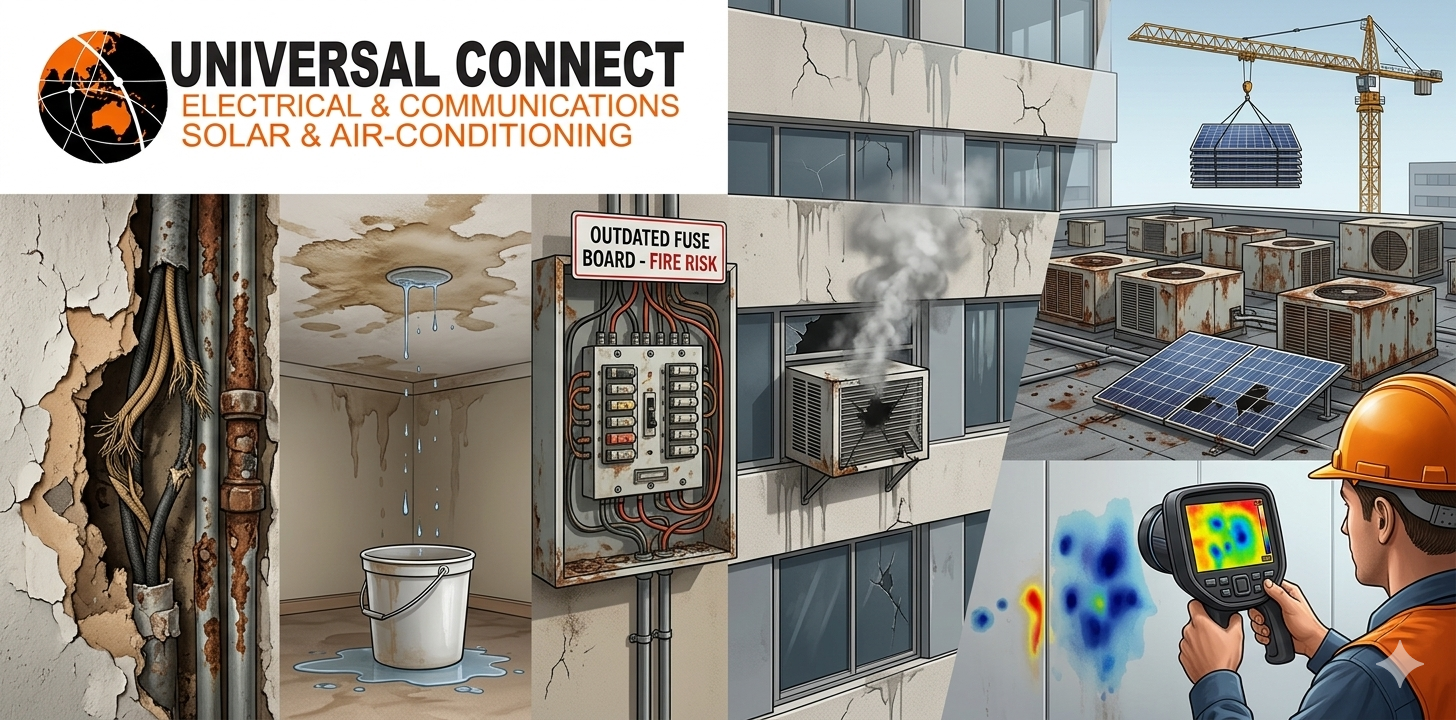
In many cases, a Commercial Building does not fail suddenly—it declines gradually through subtle performance, safety, and design issues that accumulate over time. Recognising the signs commercial building needs refurbishment early can save significant costs, prevent compliance breaches, and improve long-term asset value. For property owners, facility managers, and investors, understanding these warning signals is essential for maintaining operational efficiency and tenant satisfaction in a competitive Australian property market.
When buildings begin showing reduced functionality, outdated design elements, or rising maintenance costs, it often signals deeper structural and systems-related issues. This guide explores real-world indicators, based on practical industry experience, to help you identify when refurbishment becomes necessary rather than optional.
Commercial properties naturally degrade due to constant use, environmental exposure, and evolving regulatory standards. Over time, ageing assets such as HVAC systems, electrical infrastructure, and internal finishes begin to lose efficiency. This decline is not always obvious at first, but it manifests through rising operational costs, tenant complaints, and recurring maintenance calls.
In Australia, older buildings often fail to meet modern expectations for energy efficiency and accessibility. These early building upgrade indicators Australia professionals look for include outdated systems, poor insulation, and inefficient layouts. Recognising these signs early allows stakeholders to plan strategic refurbishment instead of reacting to costly emergencies later.
One of the clearest indicators that signs commercial building needs refurbishment are present is the consistent failure or inefficiency of core building services. These include HVAC systems, electrical distribution, plumbing networks, and fire safety systems. When these systems begin requiring frequent repairs, it often suggests deeper infrastructure deterioration rather than isolated faults.
From an industry perspective, building services degradation is one of the strongest predictors of long-term refurbishment needs. For example, outdated air conditioning systems that struggle to maintain temperature consistency often indicate broader system inefficiencies that cannot be solved through minor repairs alone. At this stage, refurbishment becomes a more cost-effective long-term solution than continued patchwork maintenance.
When maintenance costs begin increasing year after year, it is often a direct sign that the building is entering a critical lifecycle stage. Frequent breakdowns of lifts, lighting systems, or plumbing networks indicate that asset maintenance is no longer sustainable through routine servicing alone. This is especially common in buildings that have not undergone major upgrades in over 15–20 years.
In real-world scenarios, facility managers often notice that small repairs become recurring problems. For instance, replacing HVAC components repeatedly without addressing system-wide inefficiencies only delays the inevitable need for refurbishment. At this stage, a structured evaluation of building systems is essential to determine whether partial upgrades or full refurbishment is required.
Modern tenants expect more than just functional space—they expect efficiency, comfort, and adaptability. When a Commercial Building fails to meet these expectations, it becomes less competitive in the leasing market. Outdated interiors, poor lighting, and inefficient layouts are strong facility modernisation signs that the property no longer aligns with current workplace standards.
In practice, this often becomes visible through tenant turnover or declining occupancy rates. Businesses are increasingly prioritising flexible layouts, energy-efficient systems, and collaborative spaces. When a building cannot support these needs, refurbishment becomes essential not only for aesthetics but also for financial sustainability and tenant retention.
One of the most expensive long-term issues in ageing properties is energy inefficiency. Poor insulation, outdated HVAC systems, and inefficient lighting all contribute to rising operational expenses. These efficiency loss indicators are often overlooked because they develop gradually, but they have a significant financial impact over time.
Older buildings typically consume far more energy than modern standards allow. This is often due to outdated mechanical systems that cannot be upgraded effectively without broader refurbishment. Addressing these inefficiencies requires a holistic approach rather than isolated repairs, ensuring that all systems operate in alignment with modern energy standards and sustainability goals.
Design plays a critical role in building performance. When layouts become outdated or inefficient, it directly affects productivity and tenant satisfaction. Many older commercial properties were designed for traditional office structures, which do not align with modern hybrid work environments or flexible business operations.
These design limitations often result in underutilised spaces, poor traffic flow, and inefficient workspace allocation. In many cases, refurbishment is required not only to modernise appearance but to reconfigure internal layouts for improved functionality. This is particularly important in competitive urban markets where tenant expectations are constantly evolving.
As regulations evolve, older buildings may fall behind current safety and compliance standards. Fire safety systems, accessibility requirements, and structural codes are regularly updated in Australia. When a Commercial Building fails to meet these standards, it becomes a legal and operational risk.
These compliance issues often arise during routine inspections or tenant audits. For example, outdated emergency exits, insufficient accessibility features, or non-compliant electrical systems can trigger mandatory upgrades. In many cases, refurbishment is the only viable solution to bring the building back into compliance while maintaining operational continuity.
Experienced facility managers often look for patterns rather than isolated issues. A single maintenance problem may not indicate a major concern, but repeated failures across multiple systems often signal deeper structural inefficiencies.
Key early indicators include:
These signs collectively point toward the need for strategic refurbishment rather than continued reactive maintenance.
Many property owners delay refurbishment due to cost concerns, but this often leads to higher long-term expenses. One common mistake is focusing solely on visible issues while ignoring hidden system inefficiencies. For example, repainting or cosmetic upgrades may improve appearance temporarily but do not address underlying infrastructure problems.
Another frequent misconception is assuming that asset maintenance alone can extend a building’s lifecycle indefinitely. While maintenance is essential, it cannot replace the benefits of a well-planned refurbishment strategy that addresses structural, mechanical, and design-level issues simultaneously.
From an industry standpoint, the most effective refurbishment strategies are phased and data-driven. Instead of attempting full-scale upgrades at once, experienced professionals assess systems individually to prioritise high-impact areas such as HVAC, electrical, and structural integrity.
A well-planned refurbishment approach ensures minimal disruption to tenants while maximising long-term building performance. It also helps align the property with modern sustainability standards, which is increasingly important in the Australian commercial real estate market.
Identifying signs commercial building needs refurbishment requires technical expertise and a deep understanding of building lifecycle performance. Many issues are not visible without proper inspection tools or engineering assessment. This is why professional evaluation is essential before making major investment decisions.
In many cases, early intervention can significantly reduce refurbishment costs by addressing problems before they escalate into major structural or system failures.
When it comes to evaluating complex infrastructure issues and planning large-scale upgrades, expertise matters. Universal Connect Pty Ltd provides structured assessment approaches that help property owners identify inefficiencies, compliance gaps, and long-term refurbishment needs.
With experience across diverse commercial environments, Universal Connect Pty Ltd assists stakeholders in understanding the true condition of their assets and planning practical improvement strategies that align with operational goals.
For property owners seeking reliable guidance, Universal Connect Pty Ltd offers professional insights that support informed decision-making and long-term asset value protection.
Understanding the signs commercial building needs refurbishment is essential for protecting both financial and operational performance. When issues such as efficiency loss, outdated design, and compliance challenges begin to appear, they signal deeper structural needs within the property.
By addressing these issues early, property owners can avoid costly repairs, improve tenant satisfaction, and extend the lifecycle of their Commercial Building. A proactive approach ensures long-term sustainability and positions the asset competitively within the Australian market.
The most common signs include rising maintenance costs, outdated systems, poor energy efficiency, tenant complaints, and compliance issues. These indicators often suggest deeper infrastructure problems rather than isolated faults.
building upgrade indicators Australia help identify early warning signs such as inefficiency, ageing systems, and design limitations. They allow owners to plan refurbishment before issues become financially or legally critical.
Regular asset maintenance can delay deterioration but cannot fully prevent the need for refurbishment. Over time, structural and system upgrades become necessary to maintain efficiency and compliance.
Design directly affects usability, tenant satisfaction, and space efficiency. Outdated layouts are strong facility modernisation signs that often require refurbishment to meet modern business needs.
A Commercial Building should be assessed when there are repeated system failures, rising operational costs, or compliance concerns. Early professional evaluation helps avoid major structural and financial risks.